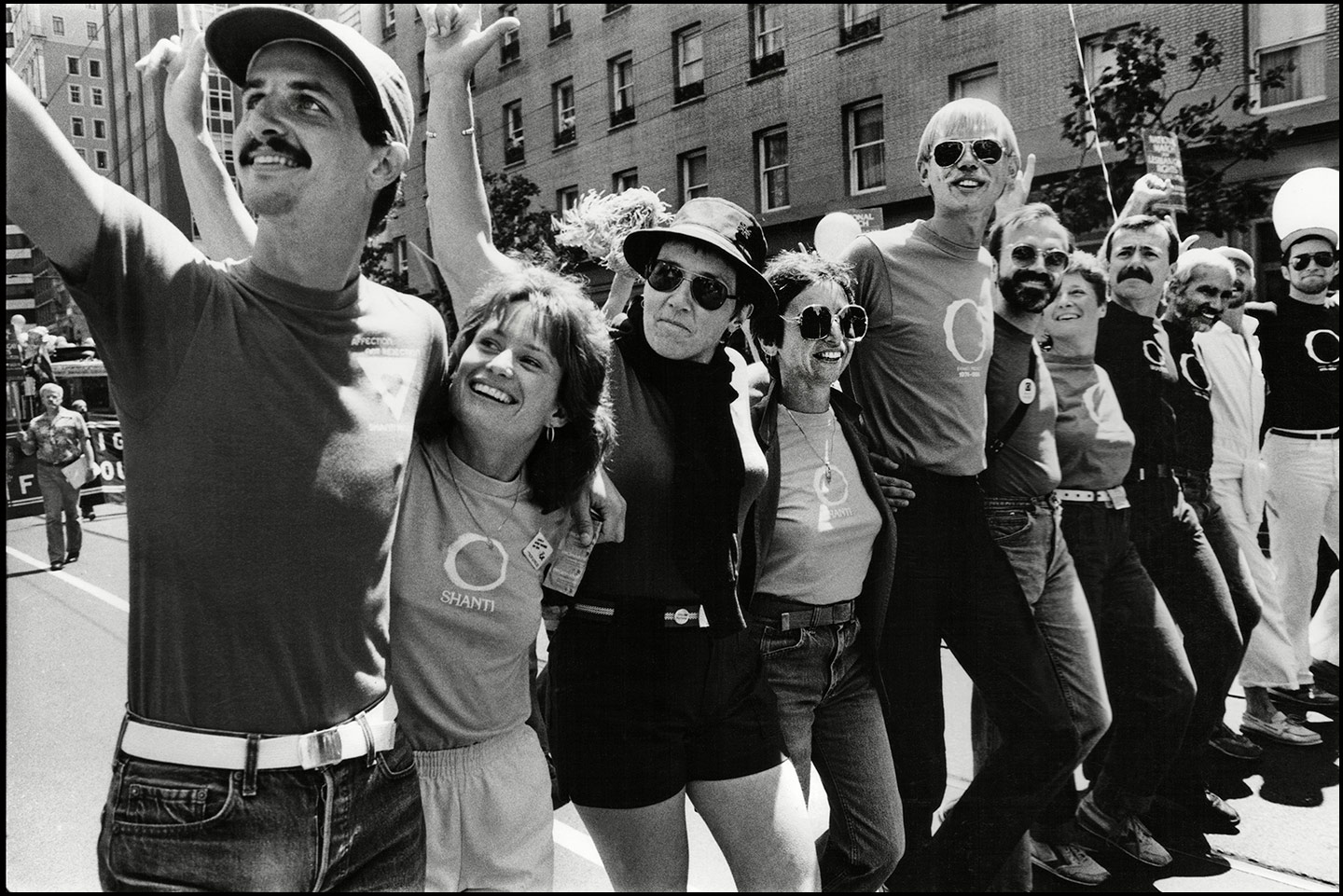

Shanti PWA Activities founder and activist Bobby Reynolds, Unknown woman, and Shanti hospital counselor Daniel Barnes with his service dog at a volunteer training. Photo by Judi Iranyi.
“In February ’87, I took the Emotional Support training as a community participant and fell in love with Shanti for really the first time. It was the most powerful two weekends I had ever lived. I knew that I had come home. Bobby [Reynolds] appeared on the client panel and looked ashen. He didn’t have long to live. I facilitated the next training in May: so much more love; so many loving, caring men and women…This training occurred as Bobby was dying. All of us grieved over losing this man…men I had known since my diagnosis. Heroes that had chosen to fight AIDS with Shanti support. They are all gone now. My peer group has steadily died off.”
-Bob Russell, PWA activist, Shanti Client and trainer, 1952-1988. You can read his Bay Area Reporter obituary here. And you can read the 1987 Eclipse article here.
“I first spoke at the Shanti Project Training last December. I found that being recognized as having something legitimate to say has really helped me, helped my self-esteem and made me feel useful again and productive. It was real nice. For a long time because I was pushing my own issues as a woman with AIDS, I was seen as a rabble rouser. It was like get out of the way, girl, you’re only causing trouble. Shanti accepted me exactly as I am and heard what I had to say and saw the usefulness in it. It was so refreshing to be heard. Shanti validated all those things that every body else was just pushing aside and it was like, “Oh, thank you.” Somebody not only heard me, but said, “Yes, yes, it’s okay to be who you are.””
-Meredith Eisberg, AIDS activist and Shanti client and volunteer
“Saturday, 5:00 pm:
The second day of the training comes to an end. In the afternoon an invited panel of people with AIDS and their practical support volunteers talked about the significance of their relationships. Many were moved by the panel members candor, humor, courage, and love. For some of the trainees, it was their first time being with a person with AIDS. The panel was followed by a non-verbal exercise in which persons are paired and feed one another.”
-Danny Castelow, Practical Support Volunteer Coordinator, “Diary of a Practical Support Training,” Eclipse Winter 1988. You can read this article here.
